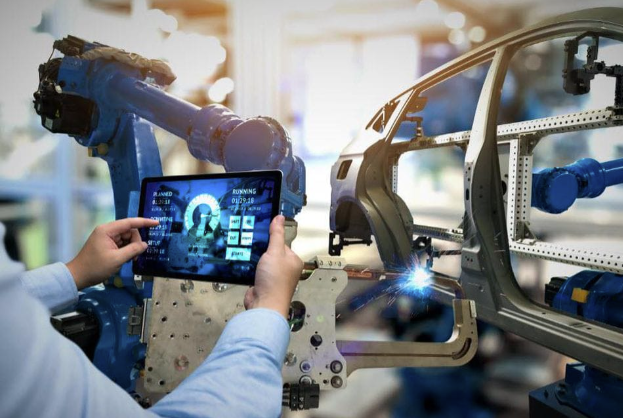
The integration of technology in smart manufacturing represents a significant shift in production paradigms. Advanced tools such as IoT, AI, and big data are not merely enhancements; they redefine operational frameworks. These technologies enable real-time analytics and agile resource management, directly influencing decision-making processes. However, the implications of these advancements extend beyond efficiency. The question remains: how will these innovations reshape competitive dynamics in the manufacturing sector?
Understanding Smart Manufacturing Technologies
Smart manufacturing technologies represent a convergence of advanced digital tools and methodologies that enhance production efficiency and flexibility.
Central to this evolution are robotic automation and digital twins, which facilitate real-time monitoring and simulation of manufacturing processes.
How Does IoT Enhance Production Efficiency?
How can the Internet of Things (IoT) significantly transform production efficiency within manufacturing environments?
IoT applications leverage sensor integration to collect real-time data, enabling seamless monitoring of machinery and processes.
This interconnectivity facilitates predictive maintenance, reduces downtime, and optimizes resource allocation.
Consequently, manufacturers achieve heightened productivity and operational agility, fostering an environment where innovation thrives and operational costs diminish significantly.
What Is the Impact of AI on Decision-Making in Manufacturing?
Artificial Intelligence (AI) plays a pivotal role in transforming decision-making processes within the manufacturing sector.
AI integration facilitates decision optimization through predictive analytics, allowing organizations to anticipate market demands and operational inefficiencies.
Moreover, process automation enhances responsiveness and adaptability, ensuring that manufacturers can swiftly align strategies with dynamic conditions.
Consequently, AI empowers decision-makers to harness data-driven insights for improved performance and competitiveness.
See also: The Role of Technology in Smart Cities
Leveraging Big Data for Continuous Improvement
Harnessing the potential of big data is essential for driving continuous improvement in manufacturing processes.
Predictive analytics enables manufacturers to identify trends and anticipate equipment failures, while data visualization tools facilitate the interpretation of complex datasets.
Conclusion
In conclusion, the integration of technology within smart manufacturing serves as a catalyst for transformation, akin to a maestro orchestrating a symphony of efficiency, adaptability, and innovation. By harnessing the capabilities of IoT, AI, and big data, manufacturers can not only streamline operations but also navigate the complexities of an ever-changing market landscape. As these technologies continue to evolve, they will undoubtedly shape the future of manufacturing, fostering a climate of continuous improvement and heightened competitiveness.


 By
By